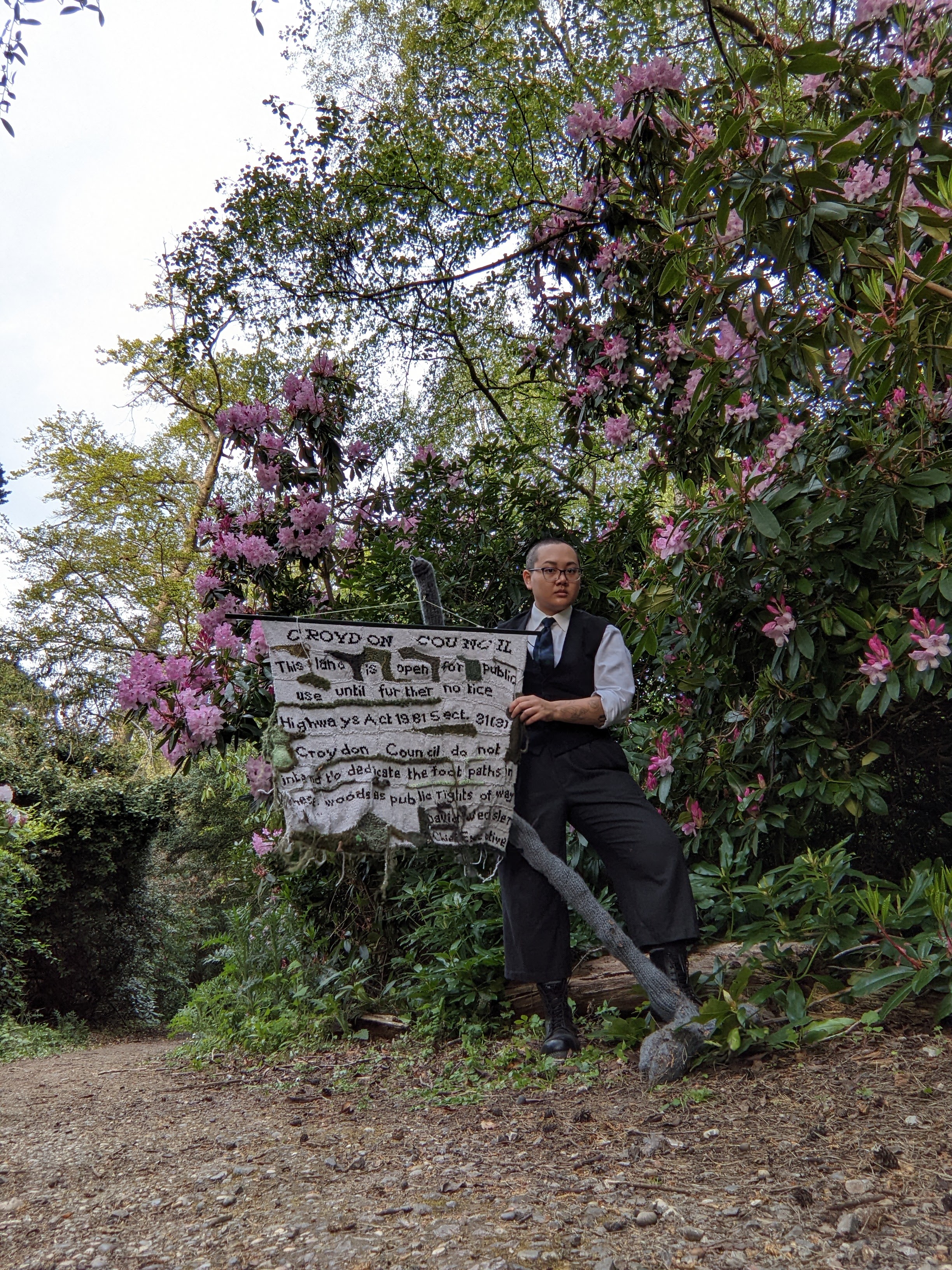
Introductory note, February 2025
Because so much current ESEA conversation is stuck in a cycle of forgetting, I thought it would be worth sharing an old unedited piece to show that we can grow and radicalise. Hopefully you can see the difference in my political thought and writing. Aren’t you tired of being nice? 🙂
For clarity, daikon* was a collective of diasporic East & South East Asians living in a UK context who produced zines and set up community events to explore intersectional experiences. Their first issue was published in 2017. I first read their work at a 2018 Outside Project event at Genesis Cinema and went along to their Spring Social in 2019, eventually becoming a friend of the group, and it was in that capacity that I went to the British Museum study day. We were invited on a tour with the curator, given free lunch, and in return gave verbal feedback.
I remember this piece being difficult to write as I felt shame towards being unable to express my real opinions in the session. I wanted to impress my friends at daikon* while also ideally not causing any conflict with anyone. Who was I to find other, more deferential Asians embarrassing? Was this internalised racism? Writing about that seemed rude and would implicate me. I was worried that everyone would somehow find out and be upset and I hadn’t decided how much that mattered to me.
Even now I think of the politesse from an older Southeast Asian woman taking the tour with me; she vaguely resembled my mother, which I already found challenging; this was not helped by her speaking of colonialism as a subject that was “sensitive” with “good and bad” aspects, delivered in the kind of exquisite Received Pronunciation deployed by actors in films about The War. (I am conscious that I still feel the urge to write her out of place, time, authenticity.) She was only trying to be agreeable to everyone but our social scripts did not align. When she delicately asked me where I was from, I said with careful emphasis that my parents were from Thailand. There was a little pause before she read her next line, so to speak, asking if we “went back” very often. Something in me curdled and I spat back a thick and lumpy answer: we didn’t “go back” very often because we were too poor. I wanted her to know she needn’t bother with me, and she didn’t. She focused on singing out her gratitude to the BM facilitator, so thankful to have been included.
I marinaded in self-pity for so long that the exhibition run was over before I could finish my write-up. In the end, as daikon* focused on advancing abolitionist knowledge via Remember & Resist in response to state violence and the pandemic, we agreed that it simply wasn’t the right moment to share something like this.
And of course we are still living in the same long moment of genocide upon genocide–only now, the liberal ESEA lodestars have published books about how institutions will save us. It seems much of our “community” is stuck in 2020, collectively regurgitating the same conversations, the same logics, the same culture of deference with resentment simmering underneath. It is some of the most cringeworthy maintenance of hegemony I have ever seen. I believe that militant liberalism is the problem–people actively desire the perpetuation of the status quo, just with “inclusive” branding and better prospects for ESEAs–so the primary goal in my writing is containing and opposing liberalism, especially where it is contiguous with fascism.
But just in case there is still any merit in the work of making people brave: I understand and see your struggle with shame and still challenge you to want something else. Start writing, drawing, doing, saying, realising different things.
***
Concerning a visit to the British Museum on 9th January 2020
In January I was invited to a study day at the British Museum on behalf of daikon*. It was object-rich and smoothly run. It was also an incredibly useful experience for me: I had more insight into how institutions see themselves, and came away with a firmer understanding that my primary support should still be grassroots movements and activist spaces.
The study day was focused on an exhibition at the British Museum, Sir Stamford Raffles: Collecting in Southeast Asia 1811 – 1824. The exhibition title was originally going to include “colonial collecting,” but this was not met with enthusiasm by the supporters of the exhibition, the High Commision of Singapore. Nevertheless, the content of the show was still very much about Raffles’ colonial collecting practises and scrutinised European ideas of collecting. I was there along with people from several other groups.
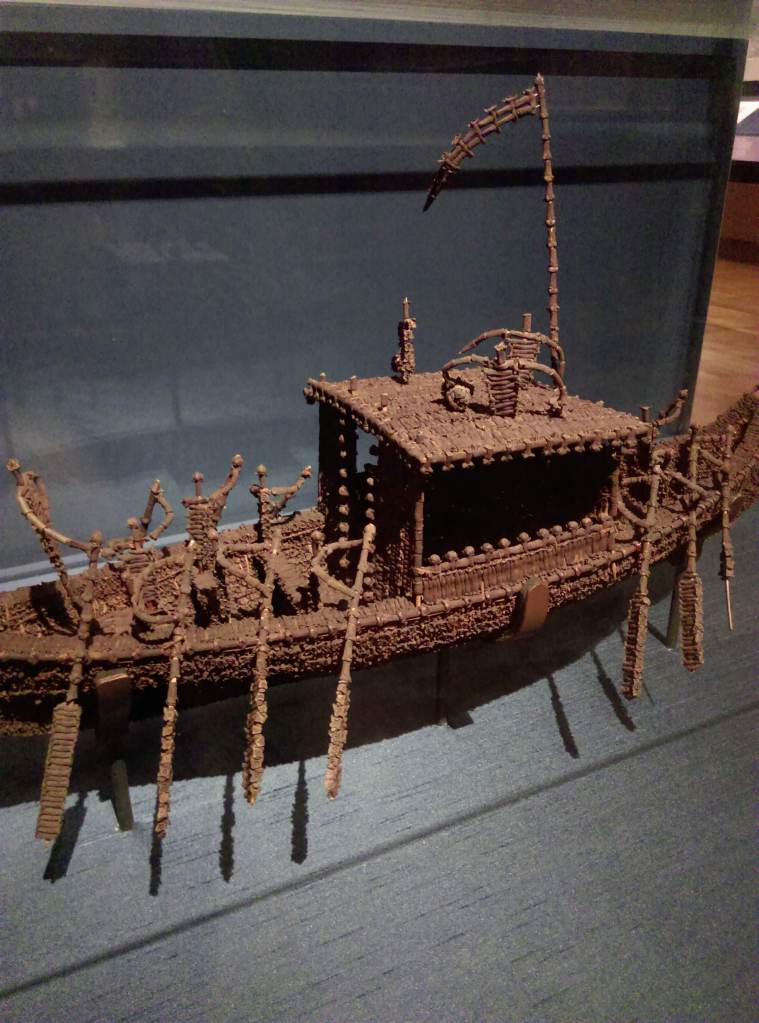
Model Boat made of cloves, AD 1700s–1900s
Our private tour with the curator, Dr. Alexandra Green, began with the hows and whys of Raffles and Indonesia. This involved sketching a verbal portrait of the man, his situation within the British Empire, and his motivations in focusing on Indonesia. Indonesia is highly fertile and well-connected; maintaining colonial domination over the islands would be advantageous for the East India Company because of the spice trade, a queasy fact illustrated by an exquisite model boat constructed from cloves near the exhibition entrance.
A portrait of Raffles also greets you as you come in. The 1817 portrait by George Francis Joseph depicts Raffles as a sophisticated administrator and scholar. He is seated amongst polished stone and rich fabric against a lush mountainous landscape, one hand grasping a paper, the other languidly hanging over the arm of the chair. His collar is high and white, his face is smug and pink. The left-hand side of the image offers more clues pointing to why Raffles was personally invested in Java: two images of seated deities—one in stone, the other in metal, neither rendered in particularly great detail—are set on a table laden with writing equipment and documents.
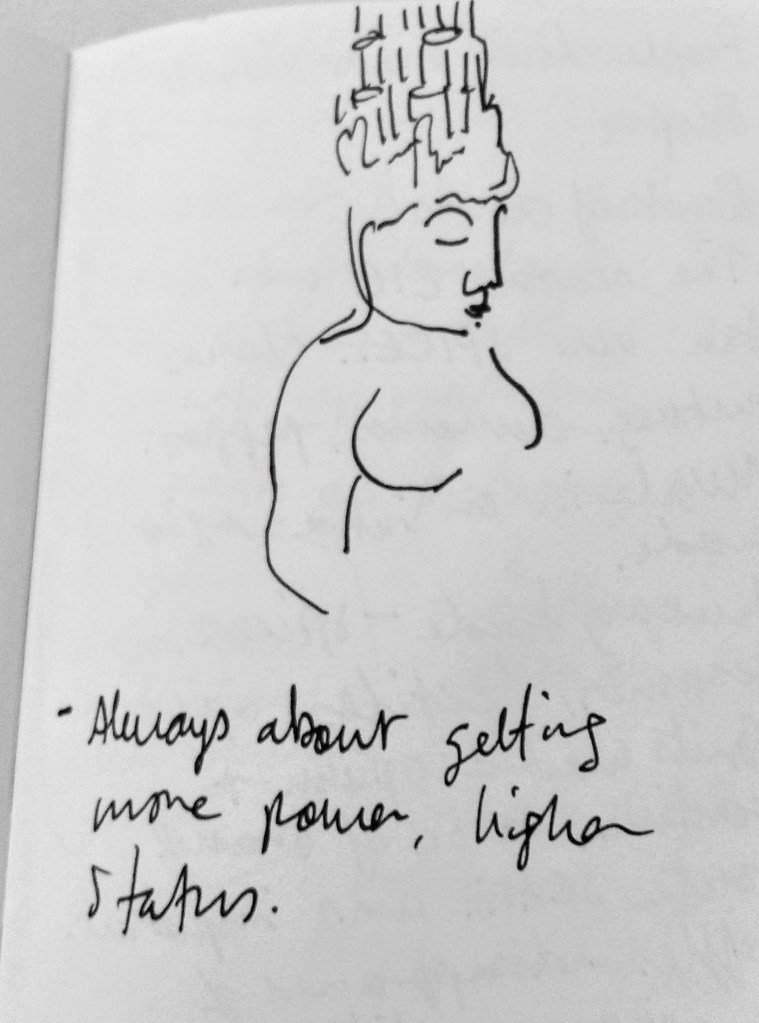
It is here that British colonial whiteness is tangled into the narrative of Raffles’ motivations and decisions. At this point we were asked not to be offended, as this was not the curator’s personal view or the British Museum’s. Raffles believed that there was a hierarchy of civilisation and that this hierarchy should be ascended. The features of a civilised society included a particular form of government, stone buildings and monuments, free trade, and written language; Java fascinated him because of its numerous stone monuments, and Raffles believed he had the White Man’s Burden to elevate this nation to an even higher level of civilisation through his work as a governor and his personal scholarship.
The exhibition turns a critical eye on Raffles’ actions. Raffles saw himself as gathering information that justified British control of Indonesia. He had the Enlightenment appetite for collecting; this period marked a shift in collecting practises from a relatively small wunderkammer into large bodies of items, feeding the European hunger for understanding the world through the information presented by groups of objects. He was collecting before these wunderkammers eventually transformed into the public museum; rather than disseminating his colonial understanding of Java and Sumatra for the good(!) of the British public, he did so privately and primarily for his own personal gain. If you had information, then important people would see you as an important resource and you would be recognised and elevated.
We were encouraged to understand that, although Raffles had risen to the position of Lieutenant-Governor, he had humble beginnings and was not of noble birth; he was working within a rigid social structure and had values and motivations that a modern audience might find disagreeable. This was contrasted with how society is seemingly more open nowadays, where apparently if you work very hard you can go to a good university. PoC, especially those of us from working class backgrounds, are quite familiar with this narrative of progress while keenly feeling the effects of this myth. The narrative presents Raffles as a complicated figure with both good and bad sides, fitting seamlessly into the larger narrative of “grey areas” and the “positive and negatives” of colonialism, as put forward by my various companions on the study visit. The past is presented as continuing only into the present by the physical objects that remain, with less focus on the power structures that still scaffold our very understanding of social mobility, achievement, and knowledge itself.
The objects that remain are numerous. Another person on the tour mused that if Raffles had not collected so prolifically, perhaps the objects may have been lost to the tropical climate, which is such a remarkable thing to say—especially because Raffles’ collection from Sumatra was actually lost at sea. The general idea of colonial-collecting-as-safeguarding is, to me, absolutely contemptible. The act of quantifying pleases a weird part of me, however: I enjoyed the insight into how the curator determined Raffles’ interests through a straightforward act of counting his collection, how many hundreds or dozens of puppets, coins, masks, drawings, and small sculptures there were. Many of the objects, particularly the puppets and masks are finely painted and gilded, thus bearing a sense of material value that was legible to the European viewer. The fact that all of these were small objects, plus drawings of immovably large pieces or environments, indicates that portability was an important consideration for collection. In addition to being small and precious goods, it was a set of information intended for transmission.
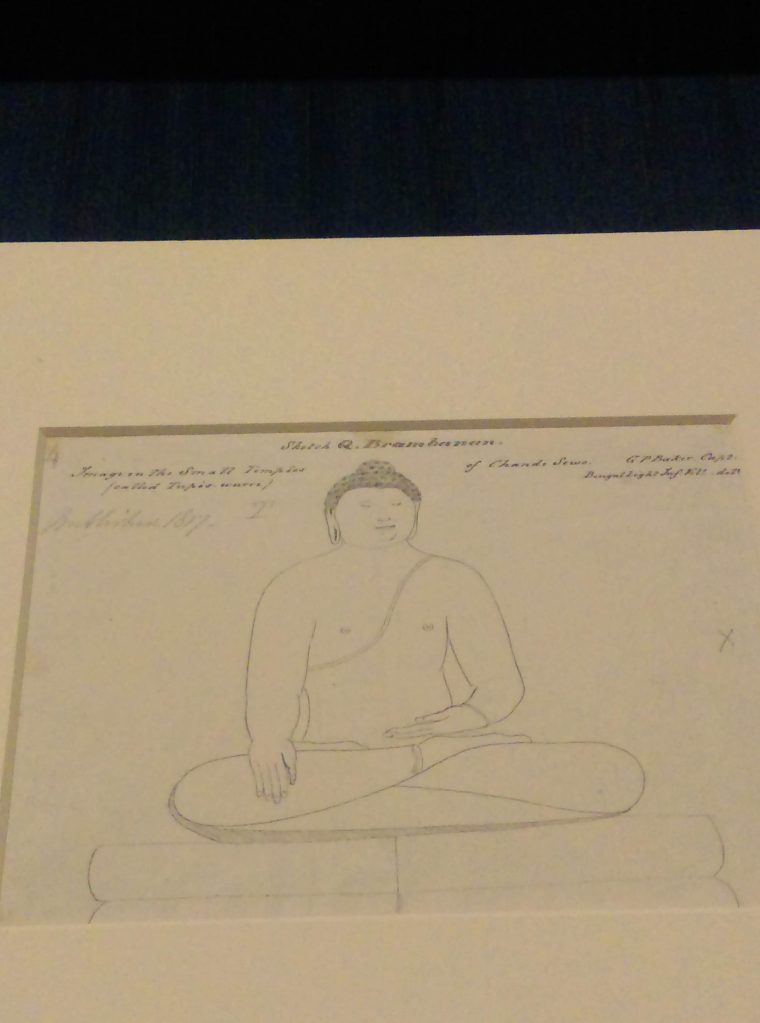
Drawing of Buddha image from Candi Sewu by G.P. Baker, 1815, ink on paper
Drawings themselves were working objects, not high-status artworks. There were numerous drawings of stone monuments and builds, both schematics and more romanticised scenes. At first I thought they were prints: they were framed in a slightly raised border of matt pale card that gave the impression of a plate on paper. The fact they were original drawings offered up different information; Raffles commissioned these drawings for his personal research, and you can clearly see through the line and mark quality that some artists struggled more than others with the act of drawing. It isn’t simply a laughably bad representation, it is a record of how white European artists literally did not understand what they were looking at.
When you draw, you are not merely marking up a piece of paper to make a flat image that replicates a three-dimensional object. You are trying to understand how everything fits together using the act of drawing. This is complex visual information. The artists hired by Raffles had failed, in various ways, to understand this information. Their descriptions suffer for it: some drawings are so odd that Green found it impossible to match the information with an actual object or monument. The prettier drawings style out poor observation, with the artists frequently falling back on familiar visual language from Western art to make a convincing-looking drawing: the goddess Durga becomes a Virgin Mary-like figure with wonky iconography, stupas become domes, the fierce kala or kirttimukha guarding temple doorways become clownish leers.
Artists also described the landscape as a Picturesque scene emptied of its dense population, showing only vast greenery with beautiful stone monuments. Thus, a particular representation of Indonesia was created under Raffles’ direction, part of his valued scholarship that helped him ascend British social hierarchy. A batch of funny drawings can be intensely political with reverberating consequences.
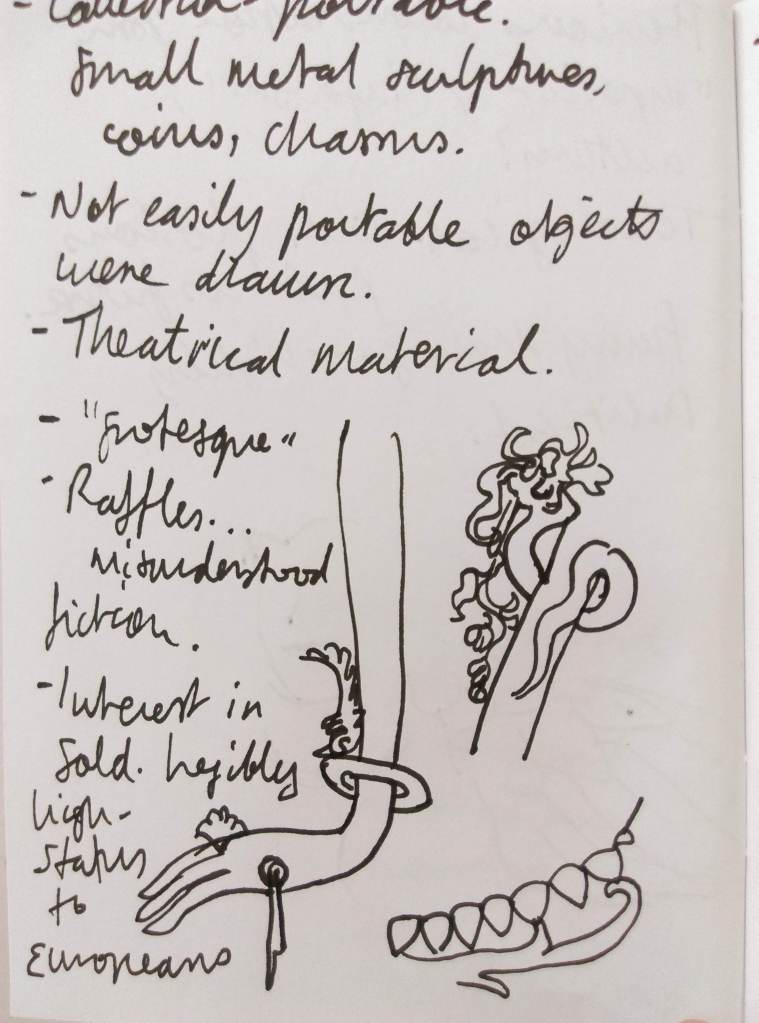
The exhibition narrative clearly shows that Raffles was dismissive towards actual Indonesian people and did not value local knowledge. He completely invented his own narrative about shadow puppets, misunderstanding the roles of the characters and how Javanese people actually engaged with this artform. He would ask people about the sites he visited only to then deride their responses with phrases such as, “I’ve put that in with Mother Goose’s Nursery Rhymes.” For all his posturing as a scholar, Raffles failed to actually collect accurate information. This exhibition was made collaboratively with Indonesian scholars, prioritising their knowledge in the way Raffles absolutely did not. Despite this focus on a high level of scholarship, there was still something that didn’t sit right with me.
After lunch—you may as well get free lunch out of days like this—we went down into the basement storage. Even I, with my practised ingratitude towards large institutions, felt like I had been let in on a secret when I was shown behind the scenes at the British Museum. There are perfectly ordinary doors all over the museum that lead to its inner workings: maze-like offices that smell sweetly of wood interiors and old books; a whole room filled with little models of exhibitions; elevators behind wooden doors that descend into basements where thousands of cold, ancient things are numbered and neatly stored.
There, we looked at the objects from Raffles’ collection that didn’t make it into the show, shelves with metal figurines and drawers that smoothly pulled out to reveal row upon row of masks and puppets. The items were so different viewed in this context, a mass of objecthood before a story is spun out of them.
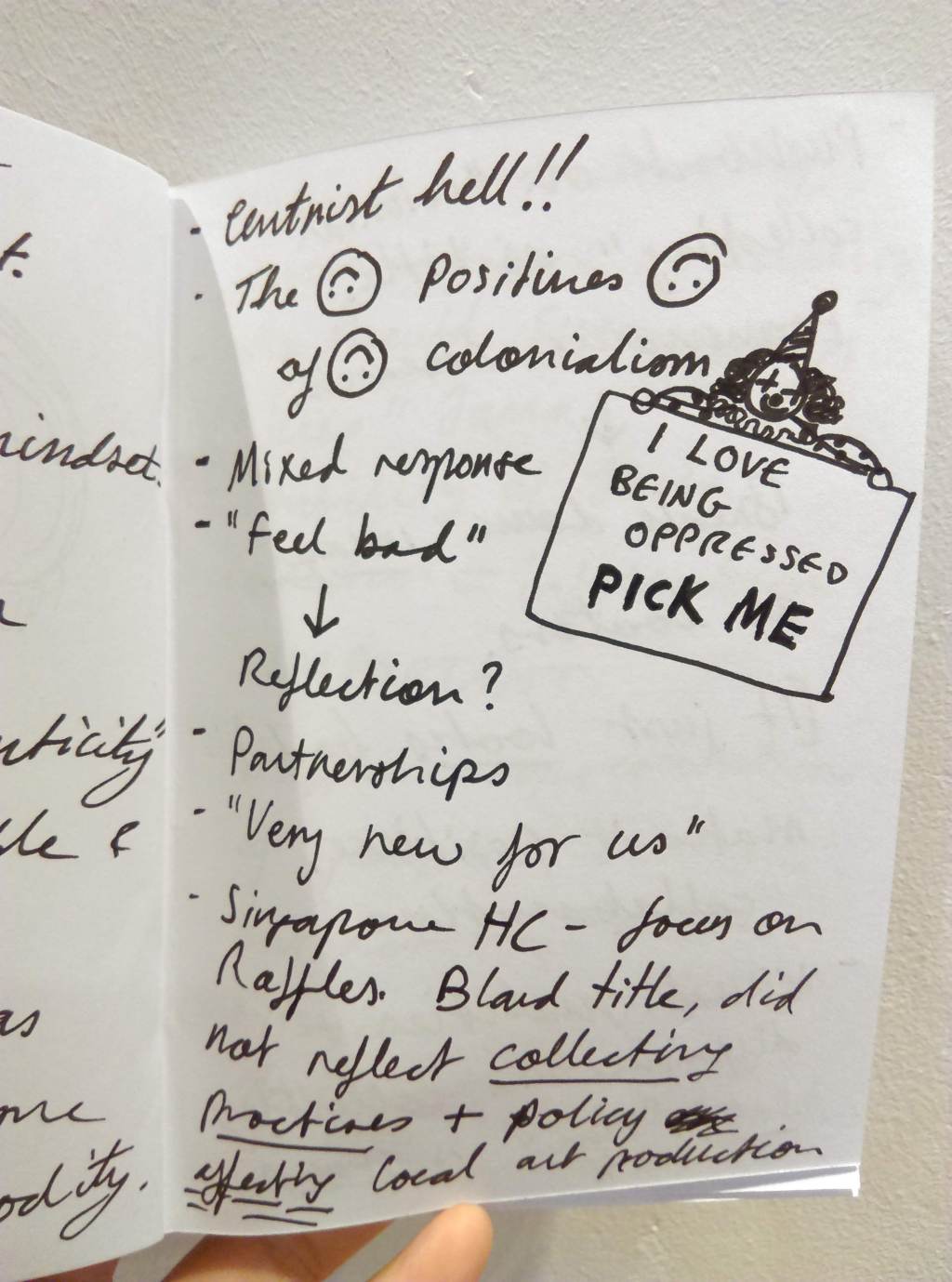
Afterwards the participants for this study day were invited to give feedback. I stayed quiet while everyone else sang out, “It was amazing, thank you.” I listened to the ensuing discussion, thinking of the most tactful way to frame my thoughts, which were completely out of tune with what everyone else had expressed. I had wanted to say a jumble of quite blunt things like:
- Why can’t we judge 19th century people’s mindsets with our moral values? Why keep up the soft-pedalling under the guise of objective scholarship? “It was different back then” prevents us from seeing how many things are very much the same now.
- Why is Raffles a uniquely complicated man and not just like every other person who was actively complicit in whiteness? His class background doesn’t explain his racism. Ideas of race were solidified in order to disrupt solidarity between the enslaved African people and poor Irish workers in America, furthering the colonial project. In Britain, working class white people are still pitted against PoC, even those who share the same class relation.
- It is astonishing that the BM seriously considering provenance research, decolonising, working collaboratively, and doing outreach work is “quite new” to the institution.
- The BM are putting a lot of work into trying to correct the public perception that their collection is just full of loot, as if this perception has little merit (it very much does) and is secondary to the scholarly aims of the institution. Perhaps something to keep in mind if it’s still hard to reach groups of people who are not the white British middle class or Pick Mes.
- What are you getting out of this, exactly? Why am I here? In what way am I useful to you? What do I owe you?
In the end, hesitant to drop such observations in a room that talked about the “positives and negatives of colonialism”, I settled for burbling about how funny the drawings were.
I felt weirdly guilty about having uncharitable thoughts. I think it was the doors that did it.
“I felt so important walking through that door,” said one of my companions had said earlier.
And it’s true: you do feel a little important. How can you not when you have been chosen to see something that other people are denied? A door is a seemingly simple thing: you take your body across the threshold and there you are. It is easier not to think about how you came to be let into that space.
Tentatively thinking about opening a door of my own, I offered the information that I worked in community hubs with The Outside Project. I wondered what responsibility I had to my community as I interacted with people who work for larger institutions—how and when we should engage, what boundaries we should lay down. Then I went out of the door and wandered the British Museum as an anonymous member of the public, trying to draw, trying to think. I felt that I had failed to do something important but could not name what exactly it was.
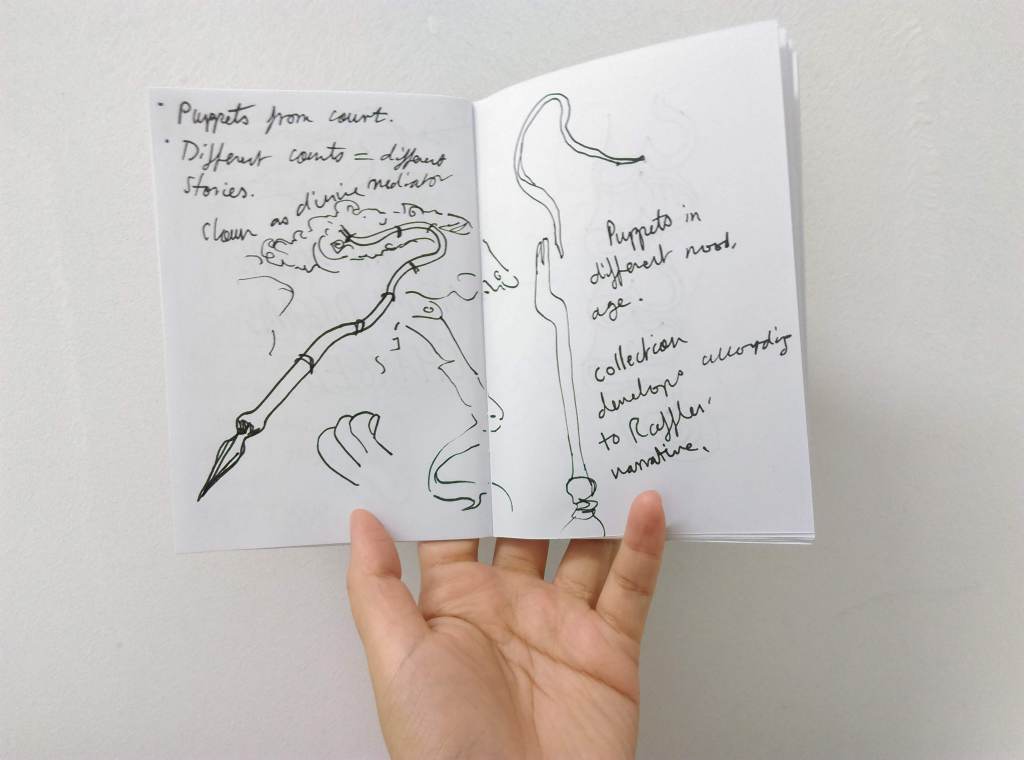
My little drawings from the day are only slightly better than G.P. Baker’s. Perhaps we both only had a minute or so to draw.
This temporary exhibition was one of several shows in recent years that have attempted to engage critically with colonial and postcolonial discourse, acknowledging the idea that museums are not a neutral space. I will never feel at ease with going to the BM, no matter how critical the exhibitions are of colonialism and how many nice events they do. The issue of decolonisation is not limited to public output of exhibitions and events: it concerns strategies, policies around collection, how everything is funded, hiring practises, and labour rights.
As The White Pube points out, museums are (and continue to be) bad vibes even though there is pressure from all sides, with public backlash and museum workers trying to push for change at every level. Change is going to be slow – after considerable public pressure, BP will no longer be sponsoring the BM’s Arctic climate change exhibition, with the PCS Union Cultures group recently holding a strong demonstration calling on the BM to drop BP sponsorship altogether. Just last year, PCS members also issued a statement in support of Ahdaf Souief’s resignation from the board. Souief described the BM’s failure to sever its relationship to BP, bring outsourced workers in-house, and repatriate colonial artworks for several years. In her open letter, she writes:
“The British Museum is not a good thing in and of itself. It is good only to the extent that its influence in the world is for the good. The collection is a starting point, an opportunity, an instrument. Will the museum use it to influence the future of the planet and its peoples? Or will it continue to project the power of colonial gain and corporate indemnity?”
This exhibition successfully scrutinised Raffles’ colonial collecting practises without ever actually implicating the British Museum itself. It was interesting to go to an exhibition at the British Museum where it was made explicitly clear these racist ideas rooted in the Enlightenment did not reflect the view of the British Museum. If you read the British Museum’s 2020 strategy, it opens with a clear statement: “The British Museum is an Enlightenment ideal. Its Trustees are responsible for making it, in each generation, a continuing reality.” The overall gist of it is that such a world-class private collection for the public is unquestionably beneficial and is entitled to all the resources it holds.
An egregious example of this is the BM’s policy on repatriation of human remains where they proceed from a “presumption of retention which can be outweighed in certain circumstances.” This “outweighing” must be performed by the claimants, who are currently all representatives of Indigenous nations. Indigenous people must prove to the BM’s standards that the remains of their ancestors do, in fact, belong to them, that these remains should be properly buried, and that repatriation is a better choice than their ancestor’s remains being kept for the benefit of the British public. I cannot see how meaningful decolonisation can take place when this adherence scholarship and “public good” is used to deny indigenous sovereignty. It is just one policy in a larger structure that deems this resource-hungry, colonial knowledge-making an institutional norm.
The BM as a whole seems to struggle with accepting this. The overwhelming impression I got from the study day is that the staff view it as a great resource that is open to everyone, but there are faulty public perceptions—an image problem—that makes it difficult for them to reach certain groups. There’s this idea that if the BM can invite people in or reach out to people, to show just how splendid their scholarship is, how very good they are to include us, then that would solve the image problem. But if PoC walk into a place and see that most of the custodial staff look like them (and are outsourced) while the senior museum staff don’t, we know it’s not a space for us. If we can see the BM reaching out or bringing in groups for gentle feedback while being defensive about calls for structural decolonising, we know it’s not a space for us.
Every engagement with such institutions is a positive indicator of their performance. Each person they successfully reach is refigured as a number in their end of year report. What you say as you’re being engaged is feedback to them—all useful information. I know this because I myself am implicated in this activity of documenting and being eager for information on how to engage people. Because we think of our work as being for the community, it can be difficult to see it as possession of power. However, my hub operates at a considerably smaller and more limited scale—you cannot call a weekly queer social hub run by two people supported by a couple of grassroots organisations with a fistful of funding a powerful institution. But this is still more power than I have ever had in my life and I feel achingly responsible about doing it right.
It’s always going to be the smaller spaces who can be more agile and radical in their approach—Displays of Power at the Grant Museum, co-curated by Subhadra Das, Luanne Meehitiya, and Hannah Cornish, interrogates their inherited colonial collection head-on and with great detail. For new museums that aren’t encumbered by such collections, there’s Queerseum and Museum of Homelessness. I got to know them through their residency at The Outside Project community centre. These grassroots activist museums are actually created by and for the communities as living museums while still being engaged in critical discourse—not mediated through formal curation and scholarship, but by the urgent conversations that are taking place right now in our spaces, structured by practises that seek to care for the community and share power so it becomes mutual responsibility. It is a totally different and vital approach, one that we could put into practise right now.
How can we go through the archive of our communities with the proper tenderness and respect?
What would a proper museum for the people look like?
 Pear Nuallak